By ADL Heating & Air Conditioning | Published October 23, 2026
If your home sits off the natural gas main and heats from a propane tank in the yard, the furnace or heat pump question comes up sooner or later. It comes up most in farmhouses and rural homes across Iroquois County and southern Kankakee County, and it comes up hardest when the propane furnace is wearing out and the air conditioner is not far behind. For a lot of these homes the honest answer is not one system or the other. It is both, working together. Here is how ADL walks owners through the choice.
Who This Guide Is For
This guide is for homes on a propane tank: farmhouses, homes on acreage and rural roads where the gas lines never reached. Propane furnaces are common in the rural parts of our area, and ADL installs and services them along with the rest of a rural home's heating system.
It is also for homeowners whose furnace and central air conditioner are both near the end at the same time. That is the moment a heat pump deserves a real look, because one installation can replace the air conditioner and take over most of the heating. If your home already has natural gas at the street, most of what follows still applies, but the cost comparison in the next section works out differently.
What Propane Costs and Why the End of the Route Pays More
The U.S. Energy Information Administration put the average Illinois residential propane price at about $2.03 a gallon for the week of March 30, 2026 (EIA weekly heating oil and propane prices, read September 2026). Treat that as a reference point, not a quote. Propane prices move week to week and through the season, and they tend to climb when a cold snap drives demand across the whole region at once.
Where you sit on the route matters too. Homes at the end of a rural delivery route, or homes that take small or infrequent deliveries, often pay more per gallon than the state average. So does who owns the tank. A leased tank ties you to the supplier that owns it, while an owned tank lets you shop between suppliers. Many suppliers also offer pre-buy contracts and budget plans that spread the cost across the year.
The most useful number is the one on your own delivery tickets. Add up last winter's gallons and what you paid for them and you have your real price per gallon. That figure, along with your electric rate, decides how a propane furnace and a heat pump compare in your house.
What a Cold-Climate Heat Pump Does Near 0°F
A heat pump does not burn fuel. It moves heat. In winter it pulls heat out of the outdoor air and carries it inside, and in summer it runs in reverse and works as an air conditioner. There is usable heat in outdoor air even on a cold day, but as the temperature falls the heat pump has less to work with, so its heating output and its efficiency fall with it.
Cold-climate models are built for this and are designed to keep heating well below freezing. A few things are normal with any heat pump in winter. The outdoor unit runs a defrost cycle now and then, and you may see a cloud of steam rise off it while it does. Air from the vents also feels cooler to the hand than furnace air, because a heat pump delivers air at a lower temperature than a furnace does. Rooms should still reach the thermostat setting.
What matters here is how cold it gets. Iroquois County winters regularly bring below-zero temperatures and wind chills of -20°F or colder, so in this area backup heat is part of the design, not an extra. Our heat pump services page explains how we plan for it.
Dual Fuel: Heat Pump Most of the Winter, Propane on the Coldest Days
Dual fuel is the setup we recommend most often for a home on propane. A heat pump sits outside where the air conditioner used to be, and a propane furnace stays inside to move the air and serve as the backup heat. The heat pump heats the house through the mild and moderate days of fall, winter and spring, and it cools the house in summer. When the outdoor temperature drops past a set point, the thermostat shuts the heat pump off and hands the job to the propane furnace, which carries the house through the coldest stretches.
The set point is not a fixed number. It is chosen at installation from three things: what you pay for propane, what you pay for electricity, and how well the house holds its heat. A tight, well-insulated house lets the heat pump run deeper into the cold than a drafty one does, and the propane price you actually pay shifts the line too, so two houses on the same road can end up with different settings.
The result is one duct system, one thermostat and two heat sources, each running when it makes the most sense, with propane saved for the deep cold. ADL builds these systems around an Armstrong Air heat pump with a matched furnace and stages the backup heat as part of the plan. Our heat pump installation page covers how we size and set one up.
When a New Propane Furnace Is Still the Right Call
A heat pump is not the answer in every house, and we will tell you when it is not. A new propane furnace on its own is still the better choice when:
- The ductwork is too small to carry the airflow a heat pump needs, and enlarging it is not practical.
- The electrical panel has no room for the heat pump without an upgrade you are not ready to make.
- The central air conditioner is still young and the furnace is what failed. Replace the furnace now and revisit a heat pump when the AC reaches the end of its life.
- It is the middle of winter, the house has no heat, and the fastest safe fix is a furnace. A heat pump can be added later.
Manufactured homes follow their own rules, and on propane that usually means a downflow furnace built for the home. Our guide to furnace options for manufactured homes covers it. For site-built homes, see our furnace installation and replacement page.
Electric Rates, Rebates and Tax Credits Depend on Your Address
Electric service in the area comes from ComEd, Ameren Illinois or Eastern Illini Electric Cooperative, depending on your address. Rates and heat pump rebate programs differ between them and change from year to year, so the only reliable numbers are current ones. Check your bill for your price per kilowatt-hour and your provider's website for the programs running now, and ask ADL before you buy so the equipment we quote matches the program's rules. One federal change is worth knowing. The federal 25C energy tax credit ended for equipment placed in service after December 31, 2025 (IRS, read September 2026).
What an ADL Visit Covers
Before we recommend either system, a technician looks at the whole house. The visit includes a load calculation, so the equipment is sized to the house rather than to the old unit, and a look at the ductwork, the electrical panel, the existing furnace and the propane tank and line. You get both options quoted side by side, a new propane furnace and a heat pump with propane backup, so you can compare them on your own numbers. We install Armstrong Air furnaces and heat pumps, and if replacing both systems at once is the sticking point, ask about our financing options.
Serving Rural Iroquois and Southern Kankakee County
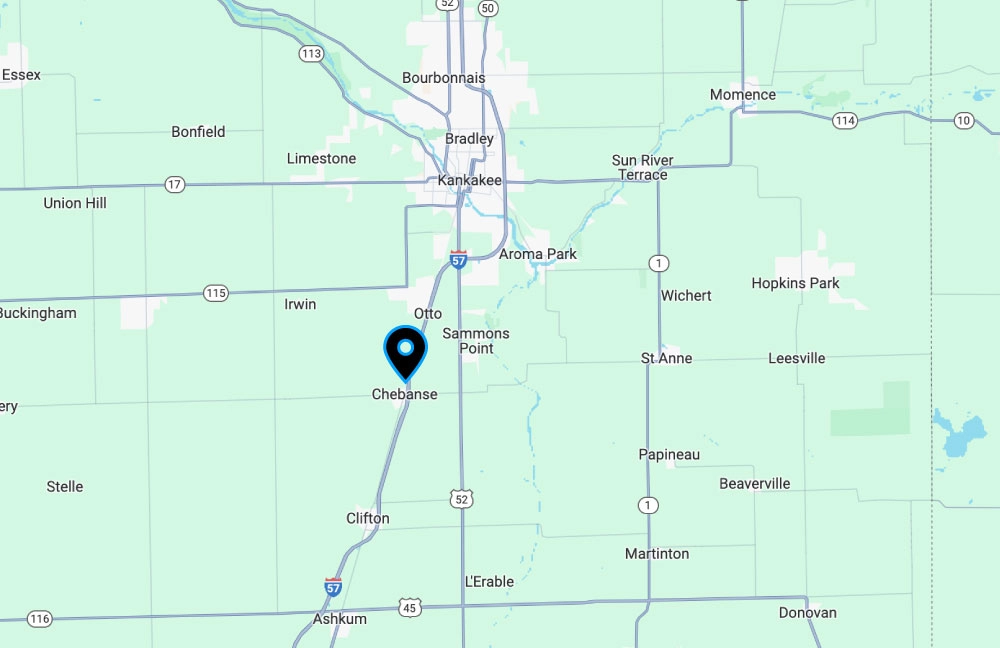
ADL works out of Chebanse and serves homes across Kankakee and Iroquois Counties, in town and out on the county roads. Owners in the southern part of our area can read more about our HVAC service in Watseka and our heating and cooling in Gilman, or call and we will talk through what makes sense at your address.
ADL Heating & Air Conditioning has been family-owned in Chebanse since 2008. We install and service propane furnaces and Armstrong Air heat pumps, and we offer same-day service during business hours, Monday through Friday, 7:30 AM to 4:30 PM. If your system is already installed and not keeping up, start with our heat pump repair page or call (815) 932-1630.