By ADL Heating & Air Conditioning | Published September 10, 2026
If you own a singlewide or doublewide in one of the parks around Kankakee, Bourbonnais, Bradley or Momence, or a home in one of the 55-plus communities in Manteno, this guide is for you. It also applies to modular homes set on a crawl space. The core point is simple: the furnace in a manufactured home is a different appliance from the one in a site-built house, and replacing it is a different job. The same goes for the air conditioner or heat pump that pairs with it. Here is what makes these systems different, how they are sized, what the options are, and what the crew does on replacement day.
Why a Site-Built Furnace Does Not Fit a Manufactured Home
A furnace in a site-built house is usually an upflow unit: it sits in a basement or utility room and pushes air up into ducts that run through the ceiling or the walls. A manufactured home has no basement and no wall chases. Its ducts run under the floor in a trunk line, often called the belly ducts, so the furnace has to be a downflow design. Air leaves the bottom of the furnace, drops into the trunk, and comes up through floor registers. A standard upflow furnace cannot connect to that trunk without a lot of improvised sheet metal, and improvised sheet metal is where leaks, poor airflow and safety problems start.
The differences do not stop at airflow direction. Manufactured home furnaces are built for a closet, so the cabinet is narrower and the clearances are tighter. They use sealed combustion, drawing outside air for the burner through a dedicated pipe and venting through a roof jack rather than a chimney, because the home has no masonry flue and the living space is small. The supply trunk and the registers are smaller too, so the blower is set up for that duct size.
Then there is the label. The federal HUD code requires that heating equipment in a manufactured home be listed for manufactured-home use, and the listing label on the cabinet is what an inspector and an insurance adjuster look for. The two things our crew finds and corrects most often are a furnace installed sideways to make it fit, and a site-built furnace forced into the closet with the venting cut to suit. Both need to come out.
Sizing: Home Length, Insulation and Duct Run
The right size comes from a load calculation, never from the label on the old unit. The home that came with the furnace may have been reskirted, re-insulated or had windows replaced since it was set, and the original furnace may have been oversized in the first place. The numbers that matter are the length and width of the home (a 16 by 80 singlewide and a 28 by 60 doublewide are very different loads), the insulation package in the floor, walls and roof, the skirting and how well it is sealed, the window area, and the length of the belly trunk the blower has to push through.
Bigger is not safer. Oversized equipment heats the thermostat area quickly, shuts off, and repeats, which is called short-cycling. It wears out parts faster and leaves the far end of the home cold because the air never runs long enough to reach it. A correctly sized unit runs longer, quieter cycles and warms the whole floor plan.
Furnace, Heat Pump or Packaged Unit: Which Fits Your Home
There are three real options for a manufactured home in our area, and the fuel available in your park usually narrows the choice.
A gas or propane downflow furnace with a split air conditioner. This is the most common setup. An Armstrong Air downflow furnace sits in the closet, and the cooling coil for a split AC mounts in the same coil cabinet, so one blower handles heating and cooling through the same belly ducts. If you are adding or replacing the cooling side, see our central AC installation page.
A heat pump with electric backup heat. In an all-electric community a heat pump is often the better fit. The outdoor unit provides both heating and cooling, and an electric backup element in the indoor air handler covers the coldest stretches of a Kankakee County winter. Armstrong Air heat pumps pair with a downflow air handler built for the same closet. Our heat pump installation page covers how the system is matched.
A packaged unit on an outdoor pad. Some homes have no closet room at all, or the closet has been converted. A packaged unit puts the furnace or heat pump and the air conditioner in a single cabinet outside on a pad, with a short duct connection into the belly trunk. It frees up the closet and keeps all the service access outside.
Which fuel a park has depends on the park. Some have natural gas service, some are propane, and some are all-electric. Our crew confirms the fuel at the home before quoting rather than assuming.
Ductless for Additions and Sunrooms
Many manufactured homes have gained an addition, an enclosed porch or a sunroom that the belly ducts never reached. Extending the trunk is rarely practical. A Mitsubishi ductless mini-split solves it with one small outdoor unit and a wall-mounted indoor head in the room, giving that space its own heating and cooling without touching the main system. See our ductless mini-split installation page for how these are set up.
What the Replacement Visit Includes
A furnace replacement in a manufactured home is more than a swap in the closet, because the ductwork under the home is part of the job. Here is the order the crew works in:
- Shut down and remove the old unit from the closet, including the old vent and any improvised transitions.
- Crawl under the home and inspect the belly board and the duct trunk for fallen sections, open joints, crushed runs and rodent damage.
- Seal open joints and reattach any duct that has dropped, so the new blower is not heating the crawl space.
- Set the new downflow furnace in the closet and connect it to the supply plenum and the trunk.
- Make the gas, propane or electric hookup and test it.
- Replace the roof jack and vent where needed and confirm the combustion air pipe is clear.
- Route the condensate line for a high-efficiency unit or for the cooling coil.
- Match the cooling coil if the home has central air, and check the refrigerant connections.
- Run the full startup: check the burner, test the limits and safeties, and measure airflow at the registers from one end of the home to the other.
For a single-unit replacement with sound ductwork, this is usually a one-day job. If the crawl inspection turns up a lot of duct damage, the crew tells you before the extra work starts.
Signs the Old One Is Done
Not every problem means replacement, and our furnace repair team fixes plenty of manufactured home furnaces that have years left in them. The signs that point to a new unit rather than another repair are these: a cracked heat exchanger on a sealed-combustion furnace, which is not repairable; repeated igniter, flame sensor or limit switch failures on a unit that is already old, where the parts are wearing out together; rust on the cabinet or the burner compartment from a closet leak or a roof jack that has been seeping; rooms at the far end of the home that never warm no matter how long the system runs; and heating bills that climb from one winter to the next with no change in how you use the home. When two or three of these show up at once, the money is better spent on replacement.
Manteno and Kankakee: Where We Do This Work
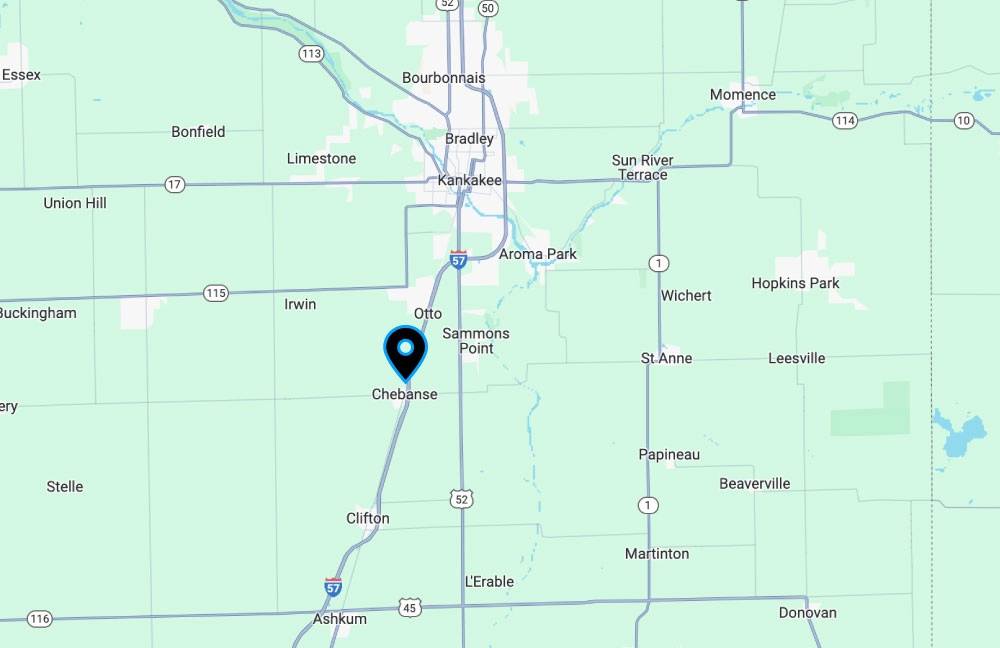
The 55-plus manufactured communities in Manteno and the parks around Kankakee, Bourbonnais, Bradley and Momence make up a large share of our manufactured home furnace and AC work. ADL is based in Chebanse and covers both Kankakee and Iroquois Counties, so the crew that quotes the job is the same one that shows up on replacement day. Learn more about our HVAC service in Manteno and our HVAC service in Kankakee, or read about everything we do for manufactured and modular home HVAC services.
ADL Heating & Air Conditioning has been family-owned in Chebanse since 2008. Whether your home needs a downflow furnace, a heat pump, a packaged unit or a mini-split for the addition, we size it, install it and stand behind it. See our furnace installation page for how we handle a new furnace, and our financing options if you would rather spread the cost of a replacement over time.