By ADL Heating & Air Conditioning | Published September 10, 2026
Kankakee County's median home was built in 1972, and about one home in five was built before 1950 (Point2Homes and BestNeighborhood housing data, read September 2026). The Riverview Historic District in Kankakee alone covers 78 acres and 118 contributing buildings, many of them past 100 years old. A large share of those houses still heat with a boiler and radiators, and the question ADL hears most in them is whether to keep the boiler or switch to a furnace. Here is how we answer it.
How Radiator Heat Works and Why Older Kankakee Homes Have It
A boiler does not blow air. It heats water, or makes steam in the oldest systems, and a circulator pump moves that water through cast-iron radiators, baseboard units or tubing in the floor. The heat radiates into the room from the metal and the water returns to the boiler to be reheated. Nothing is pushed through the house, so there is no blower noise and no rush of warm air when the system kicks on.
Older Kankakee homes have it because that is what existed when they were built. Ducted forced-air heating did not become the standard in houses until well after many of these homes went up, so they were framed with no ducts, no return grilles and no chases to run them through. The plaster walls and the floor plan were never designed to carry air. That single fact is behind most of the boiler-or-furnace decision.
Boiler vs Furnace: Comfort, Cost Drivers, Lifespan and What Fails
Comfort. Boiler heat is steady. The radiators stay warm between cycles, so the room temperature does not swing the way it does with forced air, and nothing dries out the air or moves dust around the house in January. A furnace heats a room faster but in bursts, and the blower moves whatever is in the ducts along with the air.
Cost drivers. In relative terms only: an old atmospheric boiler sends a meaningful share of its fuel up the flue, and a modern condensing boiler recovers much of it, so replacing a boiler with a boiler pays back in fuel. Converting to a furnace is a different matter. The furnace itself is not the expensive part. Cutting duct runs, return paths and chases into plaster walls and finished ceilings is, and in a two-story house from the 1920s that work can cost more than the equipment.
Lifespan. Boilers are long-lived compared to most heating equipment, and with annual service ADL still sees units running for decades in this area. Furnaces have more moving parts and an air-side heat exchanger that works harder, so they tend to be replaced sooner.
What fails. On a boiler, the usual failures are the circulator pump, zone valves, the expansion tank, pressure that keeps dropping, a leak at the base, and in the worst case a cracked section. On a furnace, it is igniters, flame sensors, limit switches, blower motors and, eventually, the heat exchanger. Most boiler failures are single components that can be replaced without touching the rest of the system.
When to Keep and Service the Boiler
Keep it when the radiators and piping are sound, the system holds pressure, and the problem is one component. A circulator, a zone valve or an expansion tank is a repair, not a reason to replace the whole system. The signals that point to a new boiler rather than another repair are cracked sections, persistent leaks that keep coming back after they are fixed, and efficiency well below a modern condensing unit on a system that is already burning a lot of fuel.
Either way, the answer in a house with sound radiators is a boiler, not a furnace. Our boiler repair and maintenance team handles both the one-component fixes and the annual service that keeps the system out of trouble.
When Converting to a Furnace Makes Sense
There are only three situations where we recommend it. First, a remodel is already opening the walls and ceilings, so the duct work can go in while everything is exposed. Second, the radiators are coming out for the floor plan, so the hydronic system is losing its delivery side anyway. Third, the owner wants central air conditioning through the same ducts and accepts the duct work as part of that decision.
In those cases an Armstrong Air furnace with a matched cooling coil is the right path, and it is a straightforward job once the ducts exist. See our furnace installation page for how we size and set a new furnace.
Combi Boilers: Heat and Hot Water from One Unit
A combination boiler heats the house and the domestic hot water from one cabinet, which frees the floor space a tank water heater takes up in a small older basement. It also means one appliance to service instead of two. Weil-McLain combi models come in 110, 150 and 199 MBH sizes, so there is a fit for a small bungalow and for a large two-story home. Our boiler installation and replacement page covers how we choose between a heat-only boiler and a combi.
Adding Cooling When There Are No Ducts
Wanting air conditioning is the most common reason an owner starts thinking about a furnace conversion, and it is usually the wrong reason. You can keep the radiators and add a Mitsubishi multi-zone ductless system: one outdoor unit, a quiet indoor head in each room that needs cooling, and small refrigerant lines run through a closet or along an exterior wall. One outdoor unit can run up to eight indoor heads, so a whole floor or a whole house can be cooled with the plaster untouched. Our ductless mini-split systems page explains how these are laid out.
What a Boiler Service Visit Includes, and How to Bleed a Radiator
The yearly visit covers the burner, the controls, the pressure and the safety relief valve, the circulator pump and the water side of the system. The technician then bleeds the radiators and confirms the system holds pressure. Book it in the fall before the first hard freeze, when a no-heat call turns into an emergency. Our service plan schedules it every year so it does not get forgotten, and our boiler services page lists everything the visit covers.
Bleeding a radiator is something you can do yourself. Put a radiator key on the small valve at the top of the radiator and open it slowly. Air hisses out first. When water appears, close the valve. Radiators that are cold at the top and warm at the bottom are holding trapped air, and bleeding fixes them. If the same radiators go cold again within days, the system is pulling in air through a leak or a tired expansion tank, and that is a service call rather than a bleeding job.
Riverview and Kankakee's Other Older Neighborhoods
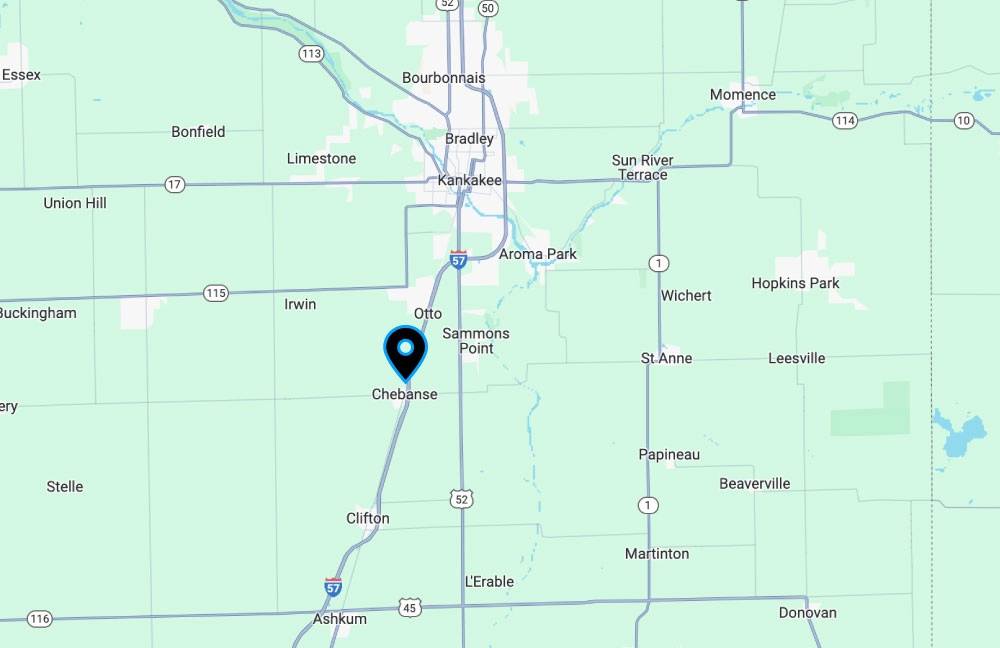
The Riverview Historic District, with its 78 acres and 118 contributing buildings, has the highest concentration of century-old homes in the county, and most of them still run hydronic heat. The older blocks near downtown Kankakee and the established neighborhoods in Bourbonnais and Bradley have the same housing stock. ADL works out of Chebanse and covers both Kankakee and Iroquois Counties, so a boiler call in any of these neighborhoods is a short drive. Learn more about our HVAC service in Kankakee.
ADL Heating & Air Conditioning has been family-owned in Chebanse since 2008. We install and service Weil-McLain boilers, Armstrong Air furnaces and Mitsubishi ductless systems, and we offer same-day service during business hours, Monday through Friday, 7:30 AM to 4:30 PM. If your radiators are not doing their job, call (815) 932-1630.